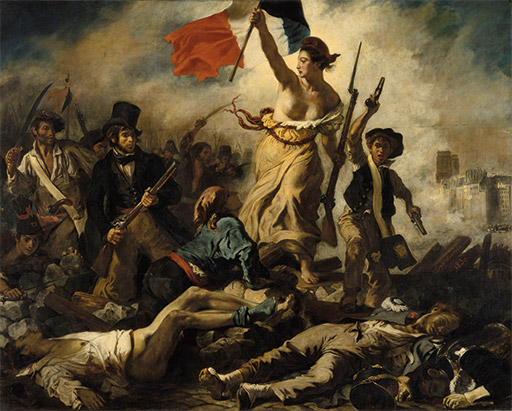
Elegance, far from remaining a universal truth of the matter, has constantly been political. What we contact “attractive” is usually formed not only by aesthetic sensibilities but by devices of energy, prosperity, and ideology. Throughout hundreds of years, artwork continues to be a mirror - reflecting who retains influence, who defines style, and who receives to choose exactly what is worthy of admiration. Let's have a look at with me, Gustav Woltmann.
Beauty like a Software of Authority
During heritage, beauty has hardly ever been neutral. It's got functioned as a language of electrical power—diligently crafted, commissioned, and controlled by people who search for to condition how society sees by itself. Through the temples of Historic Greece to the gilded halls of Versailles, attractiveness has served as both equally a image of legitimacy and a method of persuasion.
Within the classical entire world, Greek philosophers for instance Plato joined beauty with moral and intellectual virtue. An ideal overall body, the symmetrical facial area, and also the balanced composition were not simply aesthetic ideals—they reflected a belief that purchase and harmony have been divine truths. This Affiliation involving Visible perfection and ethical superiority grew to become a foundational concept that rulers and establishments would regularly exploit.
In the Renaissance, this idea arrived at new heights. Rich patrons such as Medici spouse and children in Florence used art to project influence and divine favor. By commissioning works from masters such as Botticelli and Michelangelo, they weren’t merely decorating their surroundings—they were embedding their power in cultural memory. The Church, too, harnessed beauty as propaganda: awe-inspiring frescoes and sculptures in cathedrals were designed to evoke not merely religion but obedience.
In France, Louis XIV perfected this tactic Along with the Palace of Versailles. Just about every architectural depth, each and every painting, every back garden route was a calculated statement of order, grandeur, and control. Beauty turned synonymous with monarchy, Together with the Sunlight King himself positioned because the embodiment of perfection. Artwork was no more just for admiration—it was a visible manifesto of political electricity.
Even in modern day contexts, governments and corporations continue to employ splendor like a tool of persuasion. Idealized promotion imagery, nationalist monuments, and smooth political campaigns all echo this similar historical logic: control the impression, therefore you Command notion.
Therefore, beauty—generally mistaken for one thing pure or universal—has prolonged served as being a refined nevertheless potent sort of authority. No matter whether via divine beliefs, royal patronage, or digital media, those who outline beauty condition not simply art, although the social hierarchies it sustains.
The Economics of Style
Art has generally existed in the crossroads of creativity and commerce, along with the idea of “flavor” frequently functions because the bridge involving the two. When attractiveness may well look subjective, heritage reveals that what society deems lovely has often been dictated by People with financial and cultural energy. Style, During this sense, gets a style of currency—an invisible nevertheless strong evaluate of class, schooling, and entry.
In the 18th century, philosophers like David Hume and Immanuel Kant wrote about taste being a mark of refinement and ethical sensibility. But in practice, taste functioned being a social filter. A chance to appreciate “excellent” artwork was tied to 1’s publicity, instruction, and wealth. Art patronage and gathering grew to become not simply a make any difference of aesthetic pleasure but a display of sophistication and superiority. Owning art, like possessing land or wonderful garments, signaled a person’s position in society.
From the 19th and 20th centuries, industrialization and capitalism expanded entry to art—but in addition commodified it. The rise of galleries, museums, and later on the global art industry remodeled style into an economic program. The value of a painting was not defined exclusively by artistic merit but by scarcity, marketplace demand, and also the endorsement of elites. This commercialization blurred the line in between artistic benefit and financial speculation, turning “flavor” right into a Resource for both equally social mobility and exclusion.
In modern day lifestyle, the dynamics of style are amplified by engineering and branding. Aesthetics are curated by means of social networking feeds, and visual style happens to be an extension of private identification. Nevertheless beneath this democratization lies precisely the same economic hierarchy: those that can afford authenticity, obtain, or exclusivity form developments that the rest of the environment follows.
Finally, the economics of style reveal how beauty operates as both of those a mirrored image as well as a reinforcement of energy. Whether by aristocratic collections, museum acquisitions, or digital aesthetics, taste continues to be considerably less about personal preference and more details on who gets to determine precisely what is worthy of admiration—and, by extension, exactly what is value investing in.
Rebellion From Classical Attractiveness
All through heritage, artists have rebelled towards the established ideals of beauty, hard the notion that artwork ought to conform to symmetry, harmony, or idealized perfection. This rebellion is not really simply aesthetic—it’s political. By rejecting classical standards, artists concern who defines elegance and whose values All those definitions serve.
The nineteenth century marked a turning point. Movements like Romanticism and Realism started to drive again towards the polished beliefs of the Renaissance and Enlightenment. Painters for example Gustave Courbet depicted laborers, peasants, and the unvarnished realities of daily life, rejecting the academic obsession with mythological and aristocratic subjects. Magnificence, as soon as a marker of standing and control, grew to become a Software for empathy and reality. This change opened the doorway for art to symbolize the marginalized as well as daily, not simply the idealized couple.
Through the twentieth century, read more rebellion turned the norm instead of the exception. The Impressionists broke conventions of precision and point of view, capturing fleeting sensations in lieu of formal perfection. The Cubists, led by Picasso and Braque, deconstructed type fully, reflecting the fragmentation of recent life. The Dadaists and Surrealists went more however, mocking the pretty institutions that upheld standard splendor, looking at them as symbols of bourgeois complacency.
In each of these revolutions, rejecting attractiveness was an act of liberation. Artists sought authenticity, emotion, and expression about polish or conformity. They disclosed that artwork could provoke, disturb, or even offend—and nonetheless be profoundly meaningful. This democratized creativeness, granting validity to varied Views and activities.
Now, the rebellion versus classical beauty continues in new forms. From conceptual installations to digital art, creators use imperfection, abstraction, as well as chaos to critique consumerism, colonialism, and cultural uniformity. Elegance, when static and distinctive, is becoming fluid and plural.
In defying classic splendor, artists reclaim autonomy—not simply in excess of aesthetics, but in excess of that means by itself. Every single act of rebellion expands the boundaries of what art could be, making certain that elegance remains a matter, not a commandment.
Natural beauty during the Age of Algorithms
From the electronic era, elegance continues to be reshaped by algorithms. What was once a make any difference of flavor or cultural dialogue is currently more and more filtered, quantified, and optimized via data. Platforms like Instagram, TikTok, and Pinterest impact what thousands and thousands perceive as “stunning,” not through curators or critics, but as a result of code. The aesthetics that increase to the very best often share another thing in widespread—algorithmic approval.
Algorithms reward engagement, and engagement favors styles: symmetry, vivid colours, faces, and simply recognizable compositions. Due to this fact, digital beauty has a tendency to converge close to formulation that you should the machine rather then problem the human eye. Artists and designers are subtly conditioned to make for visibility—artwork that performs effectively, rather than artwork that provokes believed. This has established an echo chamber of fashion, where innovation pitfalls invisibility.
However the algorithmic age also democratizes natural beauty. After confined to galleries and elite circles, aesthetic impact now belongs to any individual with a smartphone. Creators from assorted backgrounds can redefine visual norms, share cultural aesthetics, and get to international audiences devoid of institutional backing. The digital sphere, for all its homogenizing tendencies, has also turn into a site of resistance. Impartial artists, experimental designers, and unconventional influencers use these same platforms to subvert visual traits—turning the algorithm’s logic towards by itself.
Synthetic intelligence adds A different layer of complexity. AI-generated art, effective at mimicking any fashion, raises questions on authorship, authenticity, and the way forward for Imaginative expression. If equipment can produce countless variants of elegance, what will become of the artist’s vision? Paradoxically, as algorithms crank out perfection, human imperfection—the trace of individuality, the unexpected—grows a lot more important.
Elegance while in the age of algorithms So reflects the two conformity and rebellion. It exposes how electric power operates through visibility And the way artists constantly adapt to—or resist—the units that shape perception. On this new landscape, the genuine obstacle lies not in satisfying the algorithm, but in preserving humanity inside it.
Reclaiming Attractiveness
Within an age wherever natural beauty is often dictated by algorithms, markets, and mass attraction, reclaiming splendor has grown to be an act of silent defiance. For hundreds of years, natural beauty has been tied to energy—defined by people who held cultural, political, or economic dominance. But nowadays’s artists are reasserting magnificence not for a Resource of hierarchy, but to be a language of truth of the matter, emotion, and individuality.
Reclaiming natural beauty means releasing it from exterior validation. In lieu of conforming to traits or details-pushed aesthetics, artists are rediscovering magnificence as a thing deeply particular and plural. It could be raw, unsettling, imperfect—an truthful reflection of lived expertise. Regardless of whether by means of abstract sorts, reclaimed products, or personal portraiture, up to date creators are tough the idea that beauty will have to normally be polished or idealized. They remind us that magnificence can exist in decay, in resilience, or while in the regular.
This shift also reconnects natural beauty to empathy. When magnificence is not standardized, it gets to be inclusive—effective at symbolizing a broader array of bodies, identities, and perspectives. The motion to reclaim attractiveness from commercial and algorithmic forces mirrors broader cultural endeavours to reclaim authenticity from techniques that commodify interest. During this feeling, elegance becomes political yet again—not as propaganda or status, but as resistance to dehumanization.
Reclaiming natural beauty also includes slowing down in a fast, intake-driven earth. Artists who pick craftsmanship over immediacy, who favor contemplation in excess of virality, remind us that elegance normally reveals itself as a result of time and intention. The handmade brushstroke, the imperfect texture, the moment of silence concerning Seems—all stand versus the instant gratification society of digital aesthetics.
In the long run, reclaiming attractiveness is not really about nostalgia to the earlier but about restoring depth to perception. It’s a reminder that magnificence’s accurate electric power lies not in control or conformity, but in its capacity to shift, link, and humanize. In reclaiming magnificence, art reclaims its soul.